
Let me tell you, when you see the P1693 code pop up in a Mercedes-Benz, it’s not one of those everyday codes like you might see with a bad O2 sensor or misfire. This one’s a little trickier, and over the years, I’ve found it usually means there’s some kind of hiccup in how your car’s electronics are talking to each other—especially between the engine control module (ECM) and the transmission control module (TCM), or even with the system that lights up your check engine lamp (MIL). I’ve seen it in other brands too, sometimes pointing to issues with the tachometer, oil control valve, or turbo management. But in Mercedes-Benz, nine times out of ten, it’s about the ECM and TCM not playing nice together. It’s like your car’s nerves aren’t firing right—some critical signal isn’t getting through, or there’s a gremlin messing with the electrical communication. That’s what this code is all about.
DTC P1693 MERCEDES BENZ
 4888
4888 6 minutos de lectura
Otras marcas con código de error P1693
- Causas comunes del codigo P1693 mercedes-benz
- Síntomas relacionados con P1693 mercedes-benz
- Diagnóstico efectivo para P1693
- Errores frecuentes con dtc P1693 mercedes-benz
- Gravedad de los códigos de falla P1693 mercedes-benz
- Soluciones para mercedes-benz P1693
- Conclusión
- Vídeo de YouTube sobre la solicitud "dtc p1693"
- Comentarios sobre el artículo
Busque por código VIN de forma gratuita en el mercado de Avtopro.
Cómo averiguar el VIN
Encuentre recambios para Mercedes Benz. Haga clic en el modelo de vehículo para ver el catálogo de recambios.





Causas comunes del codigo P1693 mercedes-benz
From my bench in the shop, here’s what I see over and over when folks roll in with the P1693 code on their Mercedes-Benz:
- Wiring issues or bad connectors between the ECM and TCM. I once had a customer whose car kept throwing this code, and after digging around, I found a connector so crusty it looked like it had been dunked in salt water. Cleaned it up, problem gone.
- ECM or TCM going bad inside—sometimes just old age, sometimes moisture sneaks in, or maybe a voltage spike fries something. Seen it all.
- Loose, corroded, or dirty electrical connections. I can’t count how many times a quick scrub with contact cleaner worked miracles.
- Weak battery or dodgy power supply. Had a guy with a dead battery that kept tripping this code—new battery, code cleared right up.
Other brands might blame the MIL lamp, tachometer, or variable valve timing, but in Mercedes-Benz, it’s usually the electronic handshake between modules that’s the troublemaker.
Síntomas relacionados con P1693 mercedes-benz
So what’s it look like when P1693 shows up? First thing, your check engine light comes on—hard to miss. Sometimes the car goes into limp mode, which is just a fancy way of saying your Mercedes is playing it safe: less power, weird shifting, maybe stuck in one gear. I had a C-Class in last week that wouldn’t shift out of second—turns out, P1693 was the culprit. You might see error messages about the transmission or engine right on the dash. And if the problem’s flaky, the car might run fine sometimes and then act up when you least expect it. Classic intermittent headache.

Diagnóstico efectivo para P1693
Whenever P1693 shows up, I start simple—never overcomplicate things. Here’s how I tackle it, step by step:
- First, I take a good look at the wiring and connectors between the ECM and TCM. I’m hunting for frayed wires, loose plugs, moisture, or corrosion. You’d be surprised how often it’s just a dirty connector causing all the fuss.
- Next, I hook up the scanner and check for other codes. P1693 likes to bring friends—sometimes those other codes point straight to the real issue.
- Then, I run a communication test between modules with the scanner. If the scanner can’t talk to the modules, odds are the wiring or a module is to blame.
- If everything’s looking good, I check battery voltage and ground connections. Weak battery or bad ground? That’ll make your electronics act up like a kid on too much sugar.
- If I still don’t find anything, I dig deeper—testing the ECM and TCM themselves. Sometimes, swapping in a known-good module is the only way to be sure, but I save that for last.
Here’s a tip: have someone wiggle the wiring while you watch the scanner. Sometimes the fault only shows up when you move things around—just like jiggling a wire to get your old radio working again.
Errores frecuentes con dtc P1693 mercedes-benz
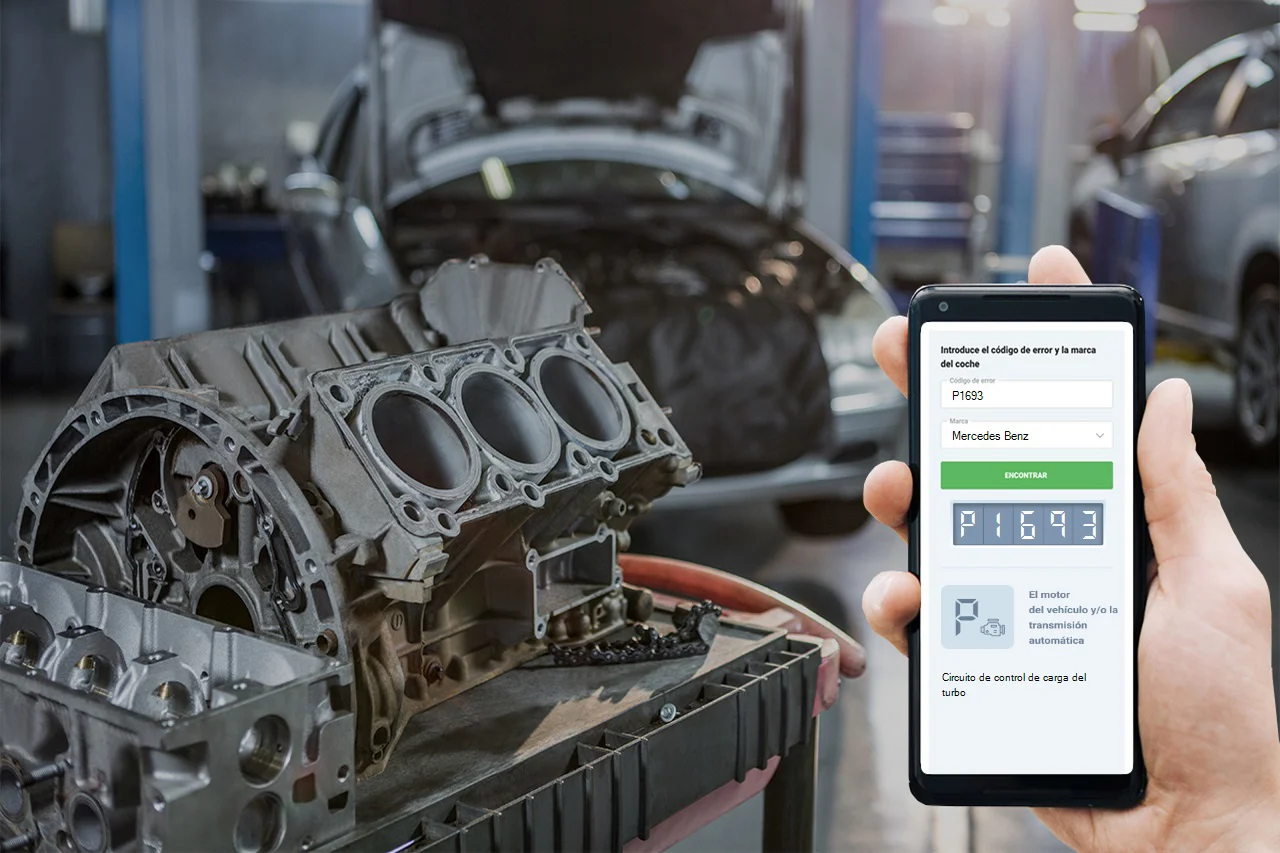
I’ve seen plenty of folks waste big money swapping expensive modules before checking the basics. Skipping the visual inspection or not cleaning connectors? That’s the classic rookie mistake. Another one: ignoring battery and ground connections—people think they’re not related, but they sure are. And don’t forget to check for other codes; P1693 often shows up as a side effect of something else. If you skip these steps, you might just be throwing parts—and cash—at the problem without fixing a thing.

Gravedad de los códigos de falla P1693 mercedes-benz
Don’t brush this off. A communication failure between modules can leave you stranded or put your car in limp mode, making it sluggish and messing with your transmission. Ignore it, and you risk frying expensive parts like the ECM, TCM, or even the transmission itself. And if your car doesn’t respond the way it should in an emergency, that’s a safety risk you don’t want. Bottom line: this isn’t something to postpone. It can go from annoying to serious real quick if you leave it unchecked.
Soluciones para mercedes-benz P1693
Here’s what’s worked for me and my customers time and again when it comes to fixing P1693 on a Mercedes-Benz:
- Clean and secure every electrical connector between the ECM and TCM. Don’t just look—give them a proper cleaning.
- Repair or replace any damaged or corroded wiring. Sometimes a wire looks fine until you bend it—then you see the break.
- Check the battery and ground connections. If they’re weak, replace the battery or fix the ground. Simple, but critical.
- Only after all that, if you still have trouble, consider swapping out a bad ECM or TCM. But don’t rush to replace expensive modules before you’ve checked everything else.
Always start with the easy, cheap fixes. I’ve saved folks thousands by not jumping straight to the big-ticket parts.
Conclusión
To wrap it up, P1693 in a Mercedes-Benz is a warning that your car’s electronic brains aren’t talking like they should. It’s not a minor glitch—it can mess with performance and safety. My professional advice? Don’t wait. Start by checking wires and connectors, make sure your battery and grounds are solid, and only swap modules if you’re sure nothing else is wrong. Fixing it early keeps your ride reliable and saves you a bundle in the long run.



- DTC P1481 Mercedes BenzFallo en el calentador de bujía incandescente (Glow Plug), que ayuda a arrancar el motor diésel en frío.
- DTC P1482 Mercedes BenzEl módulo de control de precalentamiento (N14/2) para el sistema diésel presenta una falla y no gestiona correctamente el calentamiento de las bujías.
- DTC P1614 Mercedes BenzEl módulo de control IFI, el actuador de dosificación de combustible o el sensor de posición del riel de combustible presentan problemas de voltaje o funcionamiento.
- DTC P1192 Mercedes BenzEl voltaje externo en el sistema del motor no es el adecuado, lo que puede afectar el funcionamiento eléctrico de tu vehículo.
- DTC P1856 Mercedes BenzLa placa de contacto ‘C’ de la caja de transferencia de la transmisión tiene un cortocircuito con la batería.
Solución del error p1693 Mercedes benz en Dtc.Avto.Pro
Errores OBD 2 pueden ser útiles para investigación de problemas con el automóvil. Si te encuentras con un error p1693 en Mercedes benz, es significativo entender que este proporciona datos sobre potenciales averías en los sistemas de tu vehículo. El error p1693 para Mercedes benz puede indicar problemas.Este error se encuentra en los siguientes modelos de esta marca: Mercedes benz.
Código p1693 en Mercedes benz: diagnóstico y solución
Para determinar y resolver con mayor precisión la fuente del error en Mercedes benz, se recomienda acudir a profesionales de un taller automotriz. Los mecánicos calificados cuentan con la experiencia y las herramientas necesarias para realizar un análisis completo y la reparación correspondiente, lo que ayudará a prevenir daños adicionales en tu auto.No ignores el código p1693 en Mercedes benz, ya que advierte sobre un posible problema que podría afectar el rendimiento y la seguridad de tu vehículo. Buscar ayuda a tiempo te dará la oportunidad de mantener tu vehículo en buen estado de funcionamiento y prolongar su vida útil.